Why You're More Tired Working From Home Than You Ever Were Commuting
Quick Answer: WFH fatigue usually comes from lost natural breaks (no commute, no hallway walks, no leaving-the-building lunch), decision fatigue from blurred work/home boundaries, and reduced incidental movement — not from working harder than before.
The commute was supposed to be the exhausting part. Cutting it out should have left you with more energy, not less. Instead, plenty of remote workers hit 5pm feeling more drained than a full office day ever left them — and the reasons aren’t what most people assume.

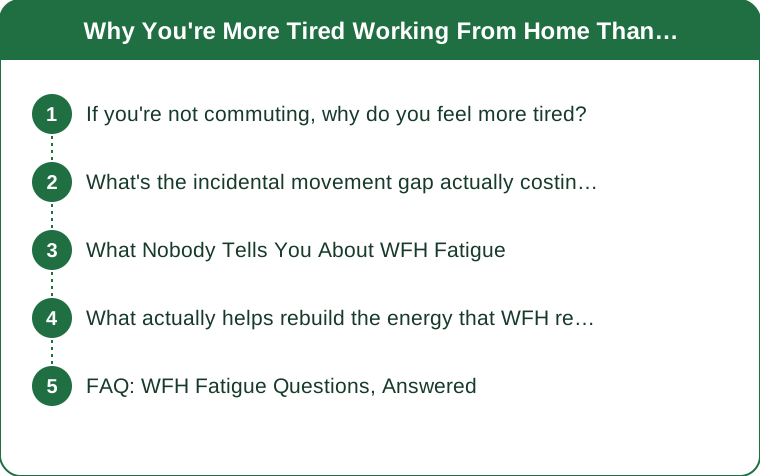
If you’re not commuting, why do you feel more tired?
Because the commute — annoying as it was — provided built-in transition time and forced movement your brain and body relied on more than you realized. Removing it doesn’t just remove stress, it removes structure.
That 20-30 minute buffer used to mentally separate ‘work mode’ from ‘home mode.’ Without it, many remote workers report feeling like they’re ‘always at work’ even when technically off the clock, which compounds fatigue over weeks.
What’s the incidental movement gap actually costing you?
A typical commuting office day includes walking to transit, walking between meetings, walking to lunch — often 1,500-3,000 extra incidental steps that simply don’t happen when your commute is 10 feet to a home desk.
That movement wasn’t just physical — short walks between tasks give your brain genuine micro-breaks that reduce cognitive fatigue. Sitting continuously removes both the physical and mental reset simultaneously.

What Nobody Tells You About WFH Fatigue
Here’s the part that surprises people: decision fatigue from blurred boundaries is often the bigger culprit than physical inactivity.
At an office, physical location did a lot of boundary-setting work for you — leaving the building meant work was over. At home, every evening involves an active decision: check email or don’t, work late or don’t, start dinner or finish one more task. That constant low-grade decision-making, repeated daily without a physical cue to end it, is measurably more mentally taxing than people expect — and it’s the piece most WFH advice skips in favor of just talking about ergonomics.
What actually helps rebuild the energy that WFH removed?
Recreate the transition ritual deliberately — a short walk before starting work and another at day’s end can restore much of what the commute used to provide, even at 10-15 minutes each.
Also build in scheduled movement breaks (every 60-90 minutes) to replace the incidental office walking you lost — even a lap around the room between meetings meaningfully reduces the continuous-sitting fatigue.
FAQ: WFH Fatigue Questions, Answered
Is WFH fatigue a real, documented phenomenon?
Yes — multiple workplace studies since 2020 have documented increased reported fatigue and blurred work-life boundaries as common remote work challenges, distinct from simple overwork.
Does a short walk really replace what a commute provided?
Not identically, but a deliberate 10-15 minute walk before and after the workday recreates much of the mental transition and movement benefit that made commutes useful, without the actual travel time cost.
Why do I feel like I’m ‘always working’ even after I log off?
That’s the blurred-boundary effect — without a physical location change, your brain doesn’t get as clear a signal that work has ended. A consistent end-of-day ritual helps rebuild that signal artificially.
TL;DR:
- Lost incidental movement (1,500-3,000 steps) and lost transition time both compound WFH fatigue
- Decision fatigue from blurred boundaries is often the bigger, less-discussed factor
- A deliberate 10-15 minute walk before/after work recreates much of what commuting provided
- Scheduled movement breaks every 60-90 minutes replace lost office walking
The fatigue is real and explainable — rebuilding the transition rituals a commute used to force is the fix most WFH advice skips.
Keep Reading
This article is for general informational and styling purposes only. Fit, sizing, and product availability may vary.