The WFH Hydration Habit Most Remote Workers Quietly Fail At
Quick Answer: WFH hydration fails mainly because the office’s built-in prompts (walking to a water cooler, coworker coffee runs) disappear at home, so the fix isn’t willpower — it’s rebuilding those same physical and social prompts intentionally, like a visible large water bottle at your desk and a scheduled midday refill walk.
The office accidentally hydrated you through sheer environmental design — a water cooler you passed daily, a coworker asking if you wanted a coffee run. Working from home removes every one of those prompts, and most people don’t replace them with anything.

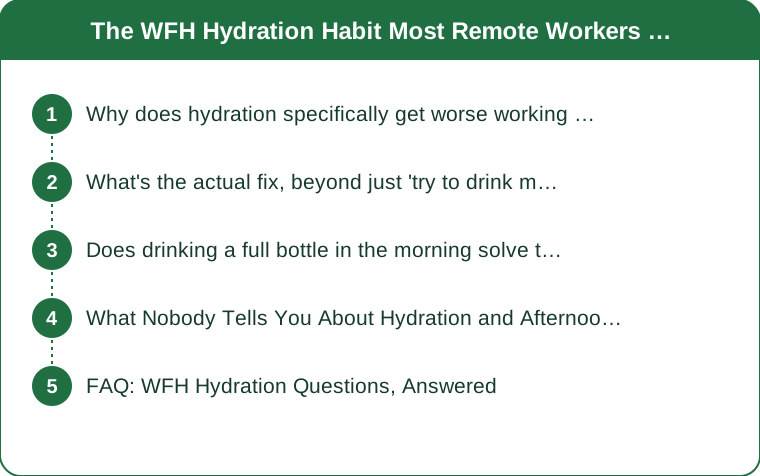
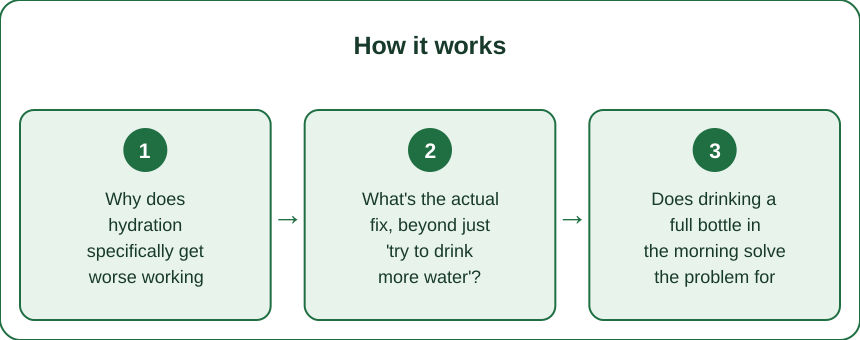
Why does hydration specifically get worse working from home, when you’d think it’d be easier?
Home environments lack the incidental movement and social prompts that offices provide passively — no walk to a shared water cooler, no coworker coffee run, no meeting room where a water pitcher sits in view. Remote workers often go hours in deep work mode without a single external cue to drink water, something the old office layout provided without anyone thinking about it.
What’s the actual fix, beyond just ‘try to drink more water’?
Rebuilding physical prompts intentionally — placing a large, visible water bottle directly in your line of sight at your desk (visibility genuinely drives intake more than people expect), and setting one or two calendar reminders for a midday and afternoon refill walk that also doubles as a short movement break away from the screen.

Does drinking a full bottle in the morning solve the problem for the whole day?
Not really — front-loading hydration in the morning without a plan for the rest of the day just shifts the same gap later, since afternoon focus time (often the deepest, most distraction-free work block for remote workers) is exactly when the lack of environmental prompts causes the biggest hydration drop-off.
What Nobody Tells You About Hydration and Afternoon WFH Fatigue
Mild dehydration is a genuinely underrated contributor to the 2-3pm energy crash that many remote workers blame entirely on lack of movement or poor sleep — even mild dehydration measurably affects concentration and perceived fatigue, and it’s an easy variable to rule out before assuming the afternoon slump requires a bigger lifestyle fix like more caffeine or an earlier bedtime.
FAQ: WFH Hydration Questions, Answered
Does coffee count toward hydration goals, or does it cancel out?
Moderate coffee intake contributes to fluid intake overall — the old idea that caffeine causes significant net dehydration in regular coffee drinkers has been largely walked back by more recent research, though water should still be the primary source.
Is there a simple way to track WFH water intake without obsessing over it?
Marking a bottle with time-based fill lines, or a simple tally on a sticky note by your desk, works better for most people than a detailed tracking app, since it’s a passive visual cue rather than an active logging task.
How much does a scheduled refill walk actually help beyond hydration itself?
Meaningfully — the short walk away from the screen provides a genuine mental reset in addition to the hydration benefit, which is part of why it’s a more effective habit than just keeping water within arm’s reach alone.
TL;DR:
- Remote work removes the passive environmental cues (water coolers, coffee runs) that used to drive hydration
- A visible water bottle and scheduled refill walks rebuild those missing prompts intentionally
- Morning-only hydration efforts leave an afternoon gap during peak focus hours
- Mild dehydration is an underrated, easy-to-fix contributor to the common WFH afternoon slump The office never made you good at hydration — it just prompted you constantly without you noticing, and working from home means you have to build those prompts back in on purpose.
Keep Reading
This article is for general informational and styling purposes only. Fit, sizing, and product availability may vary.