Why WFH Makes the Sunday Scaries Worse — and the 20-Minute Reset That Helps
Quick Answer: WFH removes the physical commute that used to mark the boundary between weekend and workweek, so your brain never gets a clean ‘off’ signal — making Sunday dread hit harder and earlier. A 20-minute Sunday reset (inbox glance, one outfit choice, one workspace tidy) rebuilds that missing boundary artificially.
It’s 6pm Sunday and your stomach is already tightening. You haven’t opened your laptop. Nothing bad has happened yet. But when your commute used to be a 40-minute buffer between ‘home you’ and ‘work you,’ your brain built its dread signal around that drive. Now there’s no drive — just the same room, the same chair, the same laptop lid closed three feet from where you’re sitting right now.

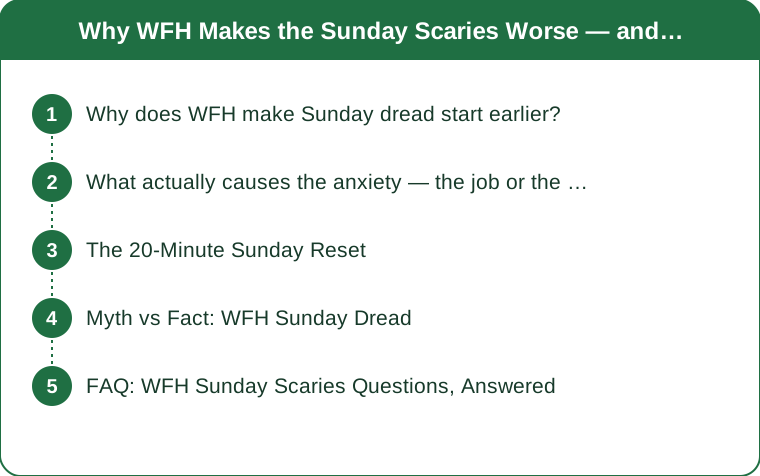
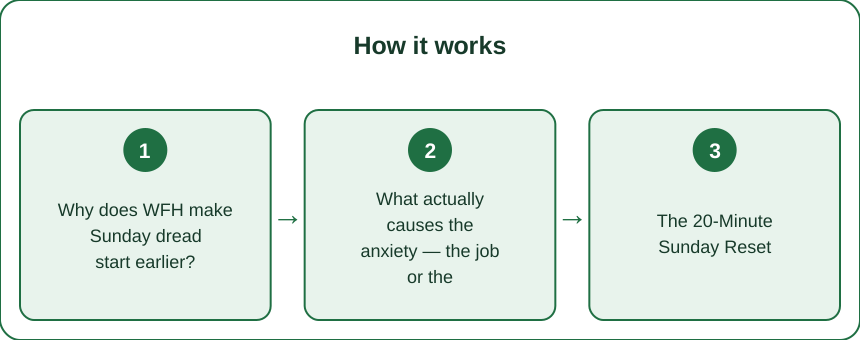
Why does WFH make Sunday dread start earlier?
Because the transition ritual disappeared, not because the job got worse. A commute — even an annoying one — gave your brain a physical marker: this is when work starts, this is when it ends.
Without it, Monday doesn’t begin at 9am. It begins the moment you glance at the closed laptop across the room and your brain quietly starts the workday early, without your permission. That anticipatory dread has nowhere else to go, so it creeps into Saturday night for some people, not just Sunday.
What actually causes the anxiety — the job or the transition?
Usually the transition. People who hate their jobs and commute report Sunday dread too, but WFH workers who like their jobs still get it, which is the tell.
The missing ingredient is a closing ritual. Commuters got one built in: drive home, door closes, work is physically elsewhere. Remote workers who never built a substitute ritual are essentially living at their office 24/7 — the laptop is always right there, so work never fully ends, and Sunday just becomes the loudest version of that low hum.

The 20-Minute Sunday Reset
Do this once, Sunday between 5-7pm, not later:
- 5 minutes — inbox glance only. Skim subject lines, flag anything urgent, close it. Do not reply. This kills the fear of Monday surprises without starting Monday’s work.
- 5 minutes — pick Monday’s outfit and workspace. Sounds trivial; it removes two micro-decisions that otherwise happen while you’re already anxious at 8:45am.
- 5 minutes — tidy the desk. A cleared desk on Sunday night is a visual signal that this space is currently off-duty.
- 5 minutes — write 3 Monday priorities, nothing more. Capping it at 3 prevents the spiral into a full to-do list.
Then close the laptop and don’t reopen it. The whole point is containment, not productivity.
Myth vs Fact: WFH Sunday Dread
Myth: More time off should mean less dread. Fact: WFH workers often have more flexible hours but less boundary clarity — and clarity, not hours, is what calms dread.
Myth: The fix is a stricter schedule. Fact: Rigid schedules help some people, but the bigger lever is a physical closing ritual — schedule alone doesn’t create the ‘work is over’ feeling a commute used to.
Myth: If you love your job, you shouldn’t get Sunday dread. Fact: Plenty of people who like their work still get it — it’s about missing transition cues, not job satisfaction.
FAQ: WFH Sunday Scaries Questions, Answered
Is Sunday night anxiety about work from home actually common?
Yes — remote workers report anticipatory work anxiety at similar or higher rates than commuters, largely tied to blurred home/work boundaries rather than workload.
Does a fake commute really help?
Many remote workers report a short walk before and after ‘clocking in’ measurably reduces the always-on feeling — it recreates the transition cue a real commute provided.
When does Sunday dread mean something more serious?
If it’s daily, intense, or spilling into physical symptoms (chest tightness, insomnia most nights), that’s worth mentioning to a doctor or therapist. This is general information, not medical advice.
TL;DR:
- WFH removes the commute’s built-in boundary, so dread has no off-switch and creeps earlier
- It’s usually about missing transition rituals, not job dissatisfaction
- Run the 20-minute Sunday reset: inbox glance, outfit pick, desk tidy, 3 priorities — then close the laptop
- Persistent, intense dread is worth a professional check-in
The goal isn’t eliminating Sunday planning — it’s giving your brain a clear stop sign so the dread has a smaller window to fill.
Keep Reading
This article is for general informational and styling purposes only. Fit, sizing, and product availability may vary.